District Launchpad
Scaling District Toward the #1 Launchpad on Base
Overview
-
Client: District
Role: Social Strategy & Management, Content Strategy, Brand Positioning, Marketing Operations, Token GTM
Duration: Q4 2025 → Q1 2026
Deliverables: Brand Positioning, Content Strategy, Go-To-Market Systems, Marketing Operations
-
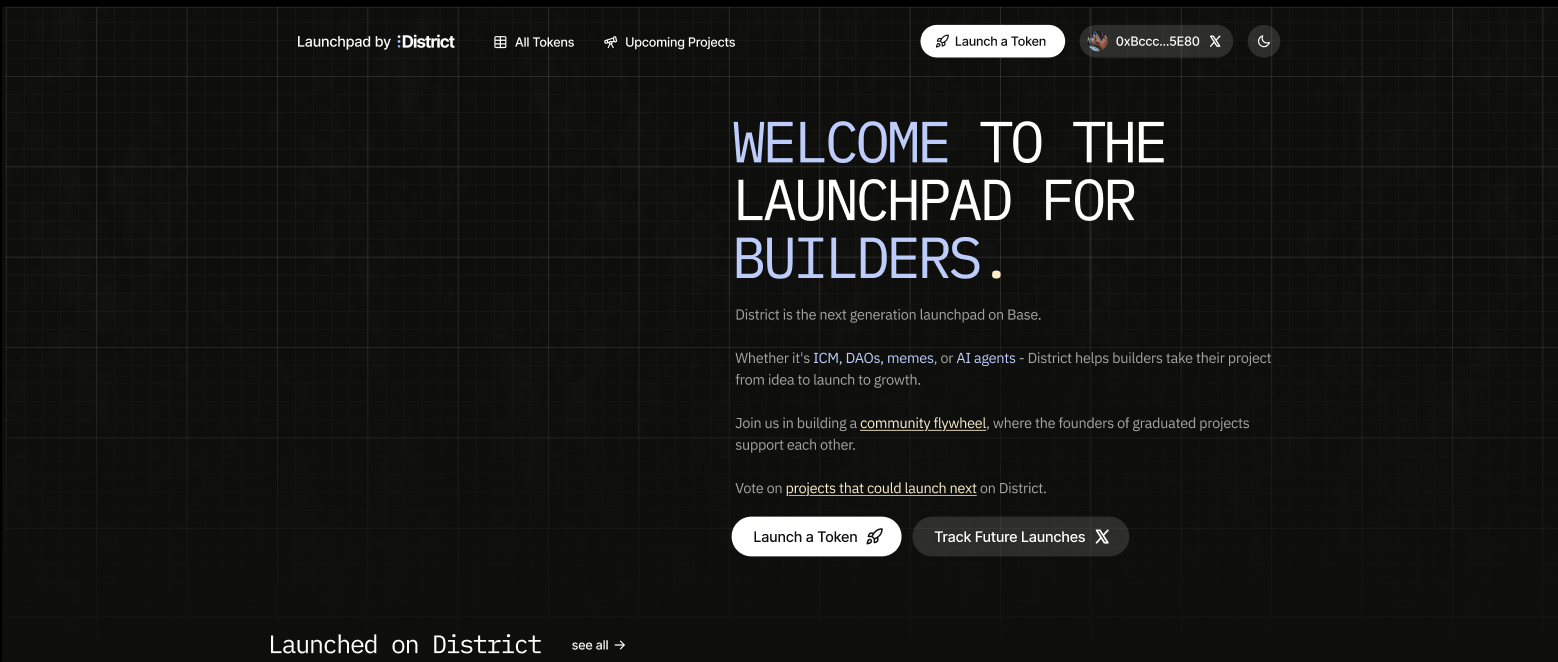
District is a Web3 launchpad built on Base, designed to help serious builders raise capital through token launches. Backed by a vetted founder, Michael Ma of L2 Ventures, the platform supports high-quality projects with both infrastructure and distribution to help them launch and scale.
When frequency began working with District, the platform had only been live for two months and remained relatively unknown—ranking outside the top tier of launchpads on Base while competing against more established players in the emerging Internet Capital Markets (ICM) category.
One line Summary:
frequency partnered with District post-launch to refine its positioning, build a differentiated narrative, and implement scalable go-to-market systems to compete for category leadership on Base.
-
District is a Base-native Web3 launchpad designed to help serious builders raise capital through token launches backed by a vetted founder and ecosystem support.
Unlike many launchpads that focus on short-term hype, District aimed to build a system that aligned long-term incentives between the platform, founders, and token holders.
District’s goals were to:
Become the #1 launchpad on Base
Increase brand awareness and credibility within the Base ecosystem
Establish a clear point of differentiation in the emerging ICM category
Build repeatable systems for partner and token launches
Grow owned audience and distribution
-
Although District had strong fundamentals, it entered a rapidly growing Base ecosystem where multiple launchpads were competing for the same attention. Two months after launch, District faced a key challenge: It was operating in a category where most players looked and sounded the same.
Key Problems to Solve:
Lack of Differentiation: Launchpads were largely indistinguishable in positioning and messaging
Early-Stage Awareness: District was still relatively unknown despite strong backing
Narrative Gap: No clear articulation of why District mattered long-term
Execution Variability: Launch success depended on inconsistent, non-repeatable processes
Strategy & Approach
frequency approached the engagement as both a repositioning effort and a systems build—ensuring District could not only stand out, but scale.
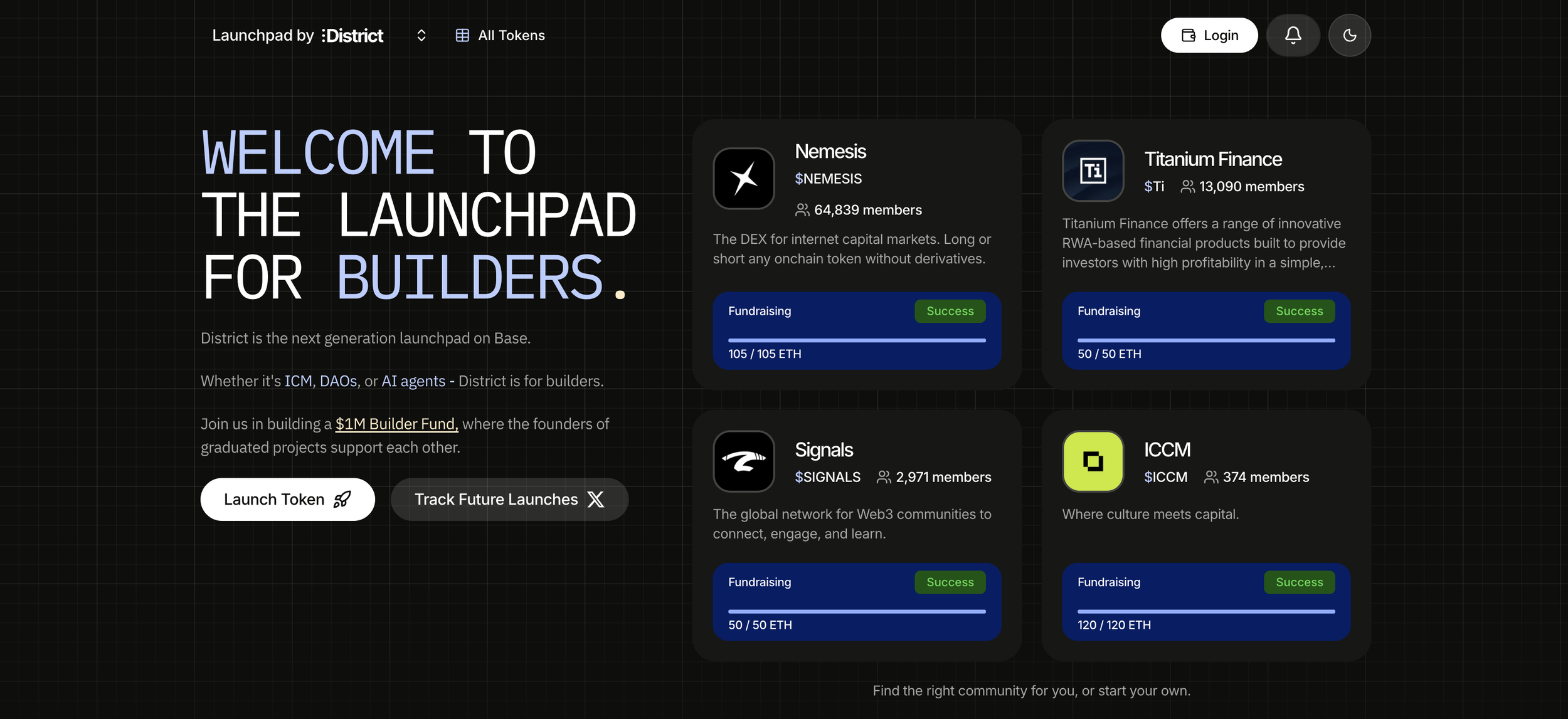
Establish Brand, Narrative, and Category Positioning
Before scaling distribution, the focus was on clarifying what District stood for—and what made it different.
What frequency did:
Positioned District as a Base-native, builder-first launchpad
Shifted messaging away from generic “launch support” toward ecosystem building and long-term alignment
Introduced a more confident, opinionated narrative to stand out in the Base ecosystem
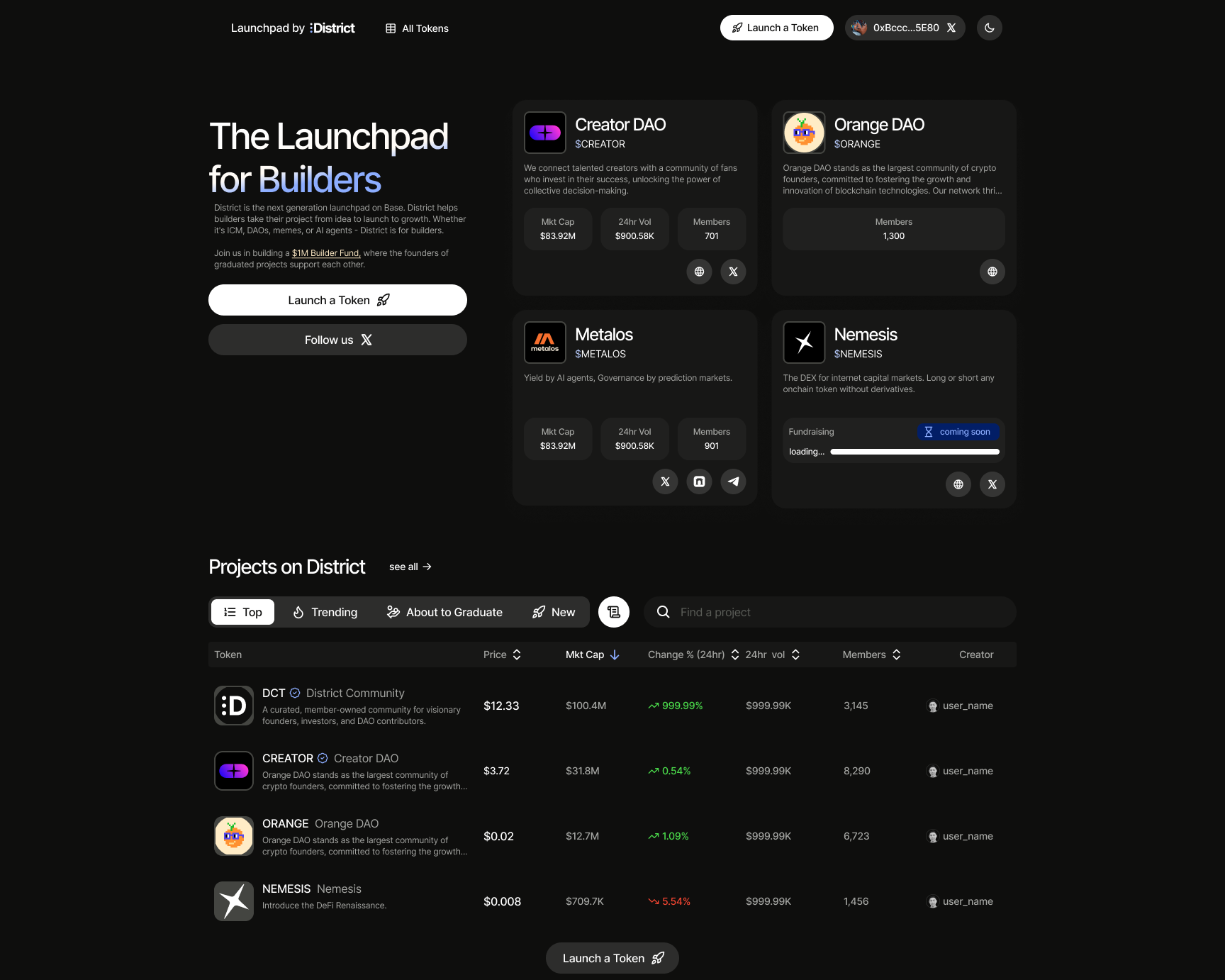
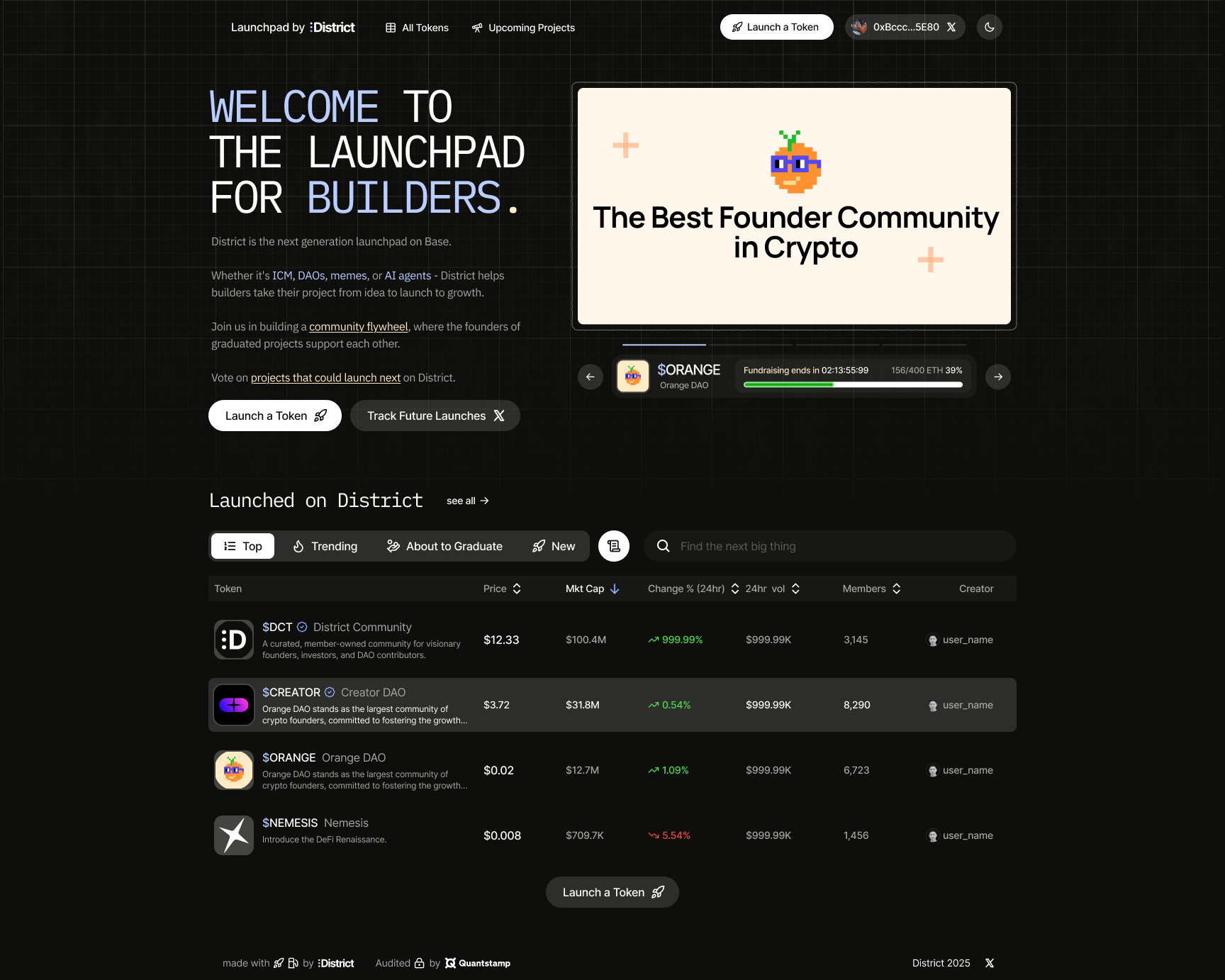
Developed a cohesive visual direction centered on a “blueprint” motif to reinforce builder identity
Clarified core audiences (builders, investors, ecosystem participants) to strengthen messaging resonance
Why it mattered:
Clear positioning transformed District from “another launchpad” into a distinct, builder-aligned platform, making it easier to understand, trust, and rally around.
Establish Brand, Narrative, and Category Positioning
To differentiate beyond messaging, District needed a core concept that reinforced its long-term vision.
What frequency did:
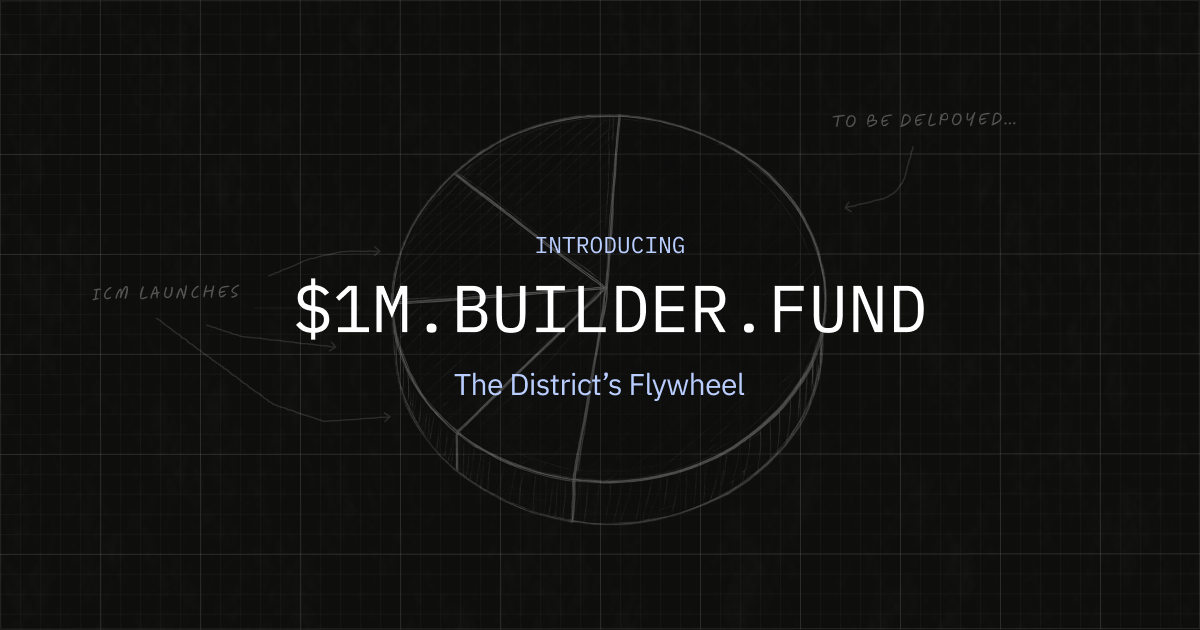
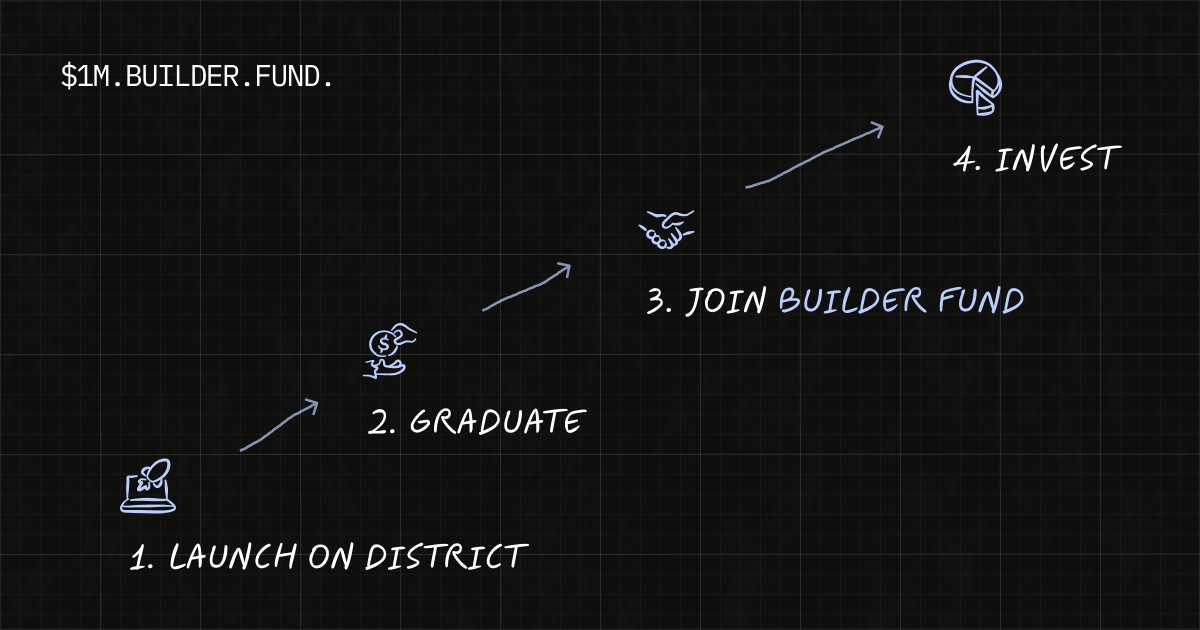
Concepted, named, and positioned the District Flywheel
Refined the model to route value and earnings back to builders and projects
Framed the Flywheel as a long-term sustainability mechanism, not a short-term incentive
Led narrative and visual execution to clearly communicate how it works
Why it mattered:
The Flywheel became a signature differentiator, helping position District as builder-aligned and long-term focused in a category often driven by short-term incentives.
Build a Go-To-Market playbook
With positioning in place, the next priority was execution at scale.
What frequency did:
Designed a repeatable GTM playbook for partner and token launches
Implemented readiness assessments to identify gaps before launch
Standardized teaser cadences, launch-day activation, and amplification
Coordinated execution across District channels, community, and KOLs
Built internal workflows to improve speed, alignment, and consistency
Why it mattered:
This transformed launches from reactive efforts into a systematized, scalable process, reducing risk and enabling consistent performance.
Execute Launches and Drive Momentum
With systems in place, execution became the primary growth driver.
What frequency did:
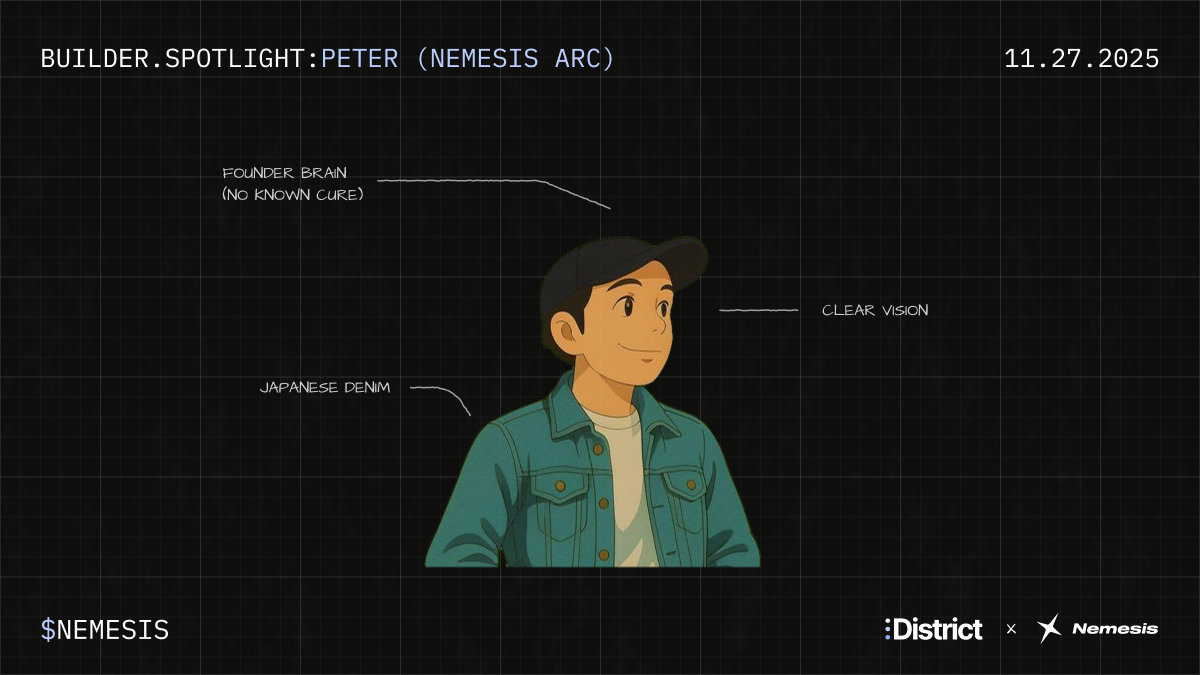
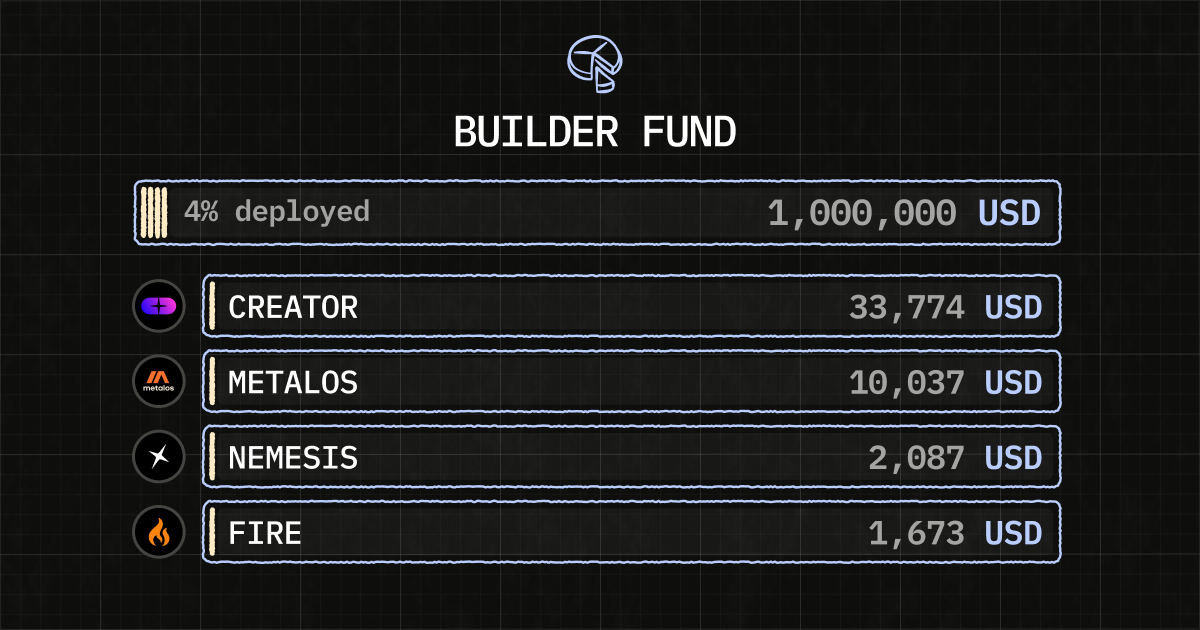
Supported and executed multiple token launches, including Nemesis
Aligned narrative, content, and distribution to maximize attention during key launch windows
Activated community and KOL networks to concentrate momentum
Why it mattered:
Coordinated execution ensured that each launch was not just active—but high-impact, driving both visibility and performance.
Results & Impact
Twitter/X growth: 3K → 7K followers during engagement
Nemesis token reached #1 on DEXScreener for top volume within 24 hours
District progressed from relatively unknown to a top 3 launchpad on Base
Increased credibility and recognition within the Base ecosystem
Michael Ma, CEO
“Before frequency, our marketing was reactive. Jasmine rebuilt our internal workflows, content cadence, and decision-making process so the team could move faster and more cohesively. Even after stepping back, the system she put in place continued to scale.”

Brand Refresh
In The Wild